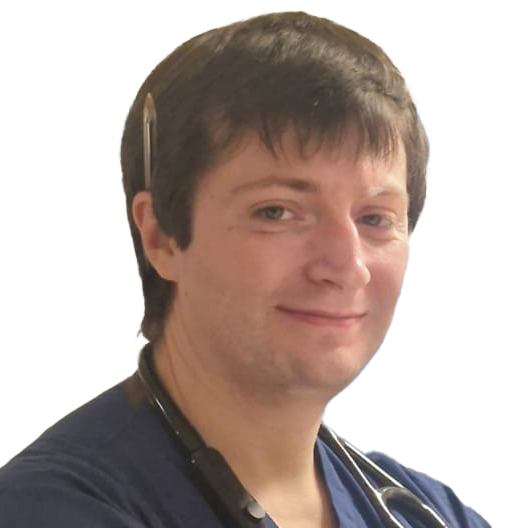


























In this Spotlight on local innovation blog, Dr Dominic Oduro Donkor and Dr Robert Potter share how the RCP Chief Registrar Programme at University Hospitals Coventry and Warwickshire (UHCW), now in its fourth year, has enabled resident doctors to lead practical improvements to everyday working conditions.
This work was presented to the RCP president and other senior officers during the RCP college visit to University Hospital Coventry in February 2026.
Applications are now open for our 2026–27 RCP Chief Registrar Programme.
What we learned
- Resident doctors are well placed to identify system and process issues that directly affect safety, efficiency and morale
- Structured handover and induction processes require senior involvement and organisational backing to be effective
- Small, well targeted changes (such as regular induction, centralised recruitment and clearer oversight of rotas) can significantly improve preparedness and confidence
- The chief registrar role provides a valuable bridge between frontline clinical insight and trust level decision making, enabling practical improvements to working lives.
As resident doctors, we experience daily how systems, processes and leadership shape our working lives. At University Hospitals Coventry and Warwickshire, the RCP Chief Registrar Programme has provided a structured way for senior registrars to translate frontline experience into practical change.
As chief registrars, we have focused on improving areas that directly affect safety, efficiency and morale, using quality improvement and collaborating with colleagues to address the everyday issues facing residents.
Medical ward handover has been a clear priority. We experienced handover as inconsistent, poorly structured and overly job focused. Problems with location and attendance often compounded these issues. What we wanted instead was a clear and consistent process, stronger senior and managerial involvement, and better facilities.
Through quality improvement work, we led reforms to improve the weekday handover process. This work emphasised structure, clarity and senior engagement, supporting better communication, shared understanding and safer care across teams.
We also highlighted variability in general internal medicine (GIM) induction and a lack of clarity around expectations, processes and opportunities for new starters. For many of us, this made starting rotations more difficult than it needed to be.
We reformed induction, moving to regular monthly sessions rather than relying on one off events. Recruitment into the GIM firm was streamlined and centralised, portfolio and structured education opportunities were strengthened, and clearer oversight of rotas was introduced. Together, these changes helped resident doctors feel better prepared and supported when starting and moving between roles.
Working with senior management, we have also supported the delivery of the NHS England 10 Point Plan to improve resident doctors’ working lives. Alongside clinical improvements, this work addressed practical issues such as facilities, communication and wellbeing, reinforcing the importance of senior leadership engagement in shaping everyday experience.
During these projects, the chief registrar role has operated across many interfaces – connecting doctors in training with consultants, managers and the wider organisation. By combining frontline clinical experience with time to lead improvement, the programme has enabled practical, system level changes that directly affect how we work.
Dr Dominic Oduro-Donkor
Chief registrar

Dr Robert Potter
Chief registrar