



























Reaching 50 accredited pulmonary rehabilitation (PR) services is a significant achievement for the Pulmonary Rehabilitation Services Accreditation Scheme (PRSAS). It represents far more than a number. It reflects years of collaboration, quality improvement (QI) and commitment from services, assessors and stakeholders across the UK – all working towards a shared goal of delivering consistently high-quality pulmonary rehabilitation for patients.
Maria Buxton, PRSAS clinical lead and the programme's first quality lead, has witnessed the scheme's development from the very beginning.
‘When we first started, there was quite a lot of learning involved for us as lead assessors as well,' Maria reflects. ‘Obviously, you need to start somewhere.’
Over the past 8 years, PRSAS has evolved significantly. What began as a new accreditation programme has grown into an established framework for quality improvement, helping services evaluate their strengths, identify areas for development and embed best practice into everyday care.
One of the most important developments has been the increasing clarity and consistency of the accreditation process.
‘We've got better at understanding what is acceptable evidence and what maybe needs to be improved upon,’ says Maria. ‘As we've evolved, we've tried to share that learning with our assessors and with services so that everyone benefits.’
This continuous learning has informed the recent review of the accreditation standards and guidance, helping services better understand requirements and navigate the process with greater confidence.
As accreditation has matured, services have increasingly recognised its value beyond achieving a quality mark. Instead, accreditation is being used as a practical tool to drive improvement.

Services are seeing the benefits of pulmonary rehabilitation accreditation in how they evaluate themselves, identify their weaknesses and strengths, focus on those gaps in quality and drive forward improvement.
Maria Buxton
PRSAS clinical lead
Achieving 50 services
University Hospital Birmingham (UHB) was the 50th service to achieve accreditation. Serving patients across three hospitals, two community wellbeing centres and a virtual programme, the service supports a diverse population with conditions including COPD, bronchiectasis, interstitial lung disease, asthma and pulmonary hypertension.
According to their pulmonary rehabilitation lead Gemma Atkins, QI was the primary motivation for pursuing accreditation.
‘We wanted to improve the quality of the service we were delivering and accreditation provided a really clear framework to help us do that,’ she says.
However, the journey was not without challenges. Like many services, UHB initially struggled with capacity. While there was enthusiasm within the team, finding dedicated time to review processes, rewrite standard operating procedures, analyse data and prepare evidence proved difficult.
The turning point came when the trust established a dedicated pulmonary rehabilitation lead role, with protected time to focus on service development, quality improvement and accreditation.
‘If there's one thing I'd stress to other services, it's that protected time is absolutely essential,’ Gemma says.
This echoes one of the key challenges Maria has observed across the programme within her reflection: ‘Accreditation absolutely requires a lot of work and I don't think there's any hiding from that. A lot of services are relatively small within large organisations, and they often struggle to find the dedicated time and support locally.’
The challenges facing services were further compounded by the impact of COVID-19, which severely disrupted pulmonary rehabilitation provision across the UK and forced many teams to focus on recovery and rebuilding before returning to accreditation activities.
The benefits of reaching accreditation
Despite these pressures, the accreditation journey frequently produces significant benefits.
For UHB, one of the most transformative outcomes was the opportunity to review and strengthen existing systems and processes. The team completely rewrote its primary standard operating procedure, created new systems to track audits, training and document reviews, and improved the way it collects and uses data.
The result has been a more structured, efficient and sustainable service.
The accreditation process has completely transformed our service. It's made us fit for the future, given us a much clearer structure for development and improved the way we work together as a team.
Gemma Atkins
Pulmonary rehabilitation lead, University Hospital Birmingham
Importantly, these improvements have translated into tangible benefits for patients. The service is now undertaking more quality improvement activity, monitoring performance more effectively and, for the first time, seeing waiting lists reduce.
Accreditation has also strengthened relationships beyond individual services.
Recognising that services needed more opportunities to engage with the programme, PRSAS introduced webinars, educational events and direct support sessions. These initiatives have helped build stronger relationships between the accreditation team and services across the country.
‘I think that's created a firmer bond between us and the services,’ says Maria. ‘They can ask questions and ask for support, and we'll try and share examples.’
UHB found that accreditation strengthened engagement with senior leaders, commissioners and stakeholders, Gemma says. ‘Accreditation has transformed our relationship with senior managers. We've had opportunities to speak at trust-wide events, share updates with patient groups and engage with senior leaders much more regularly.’
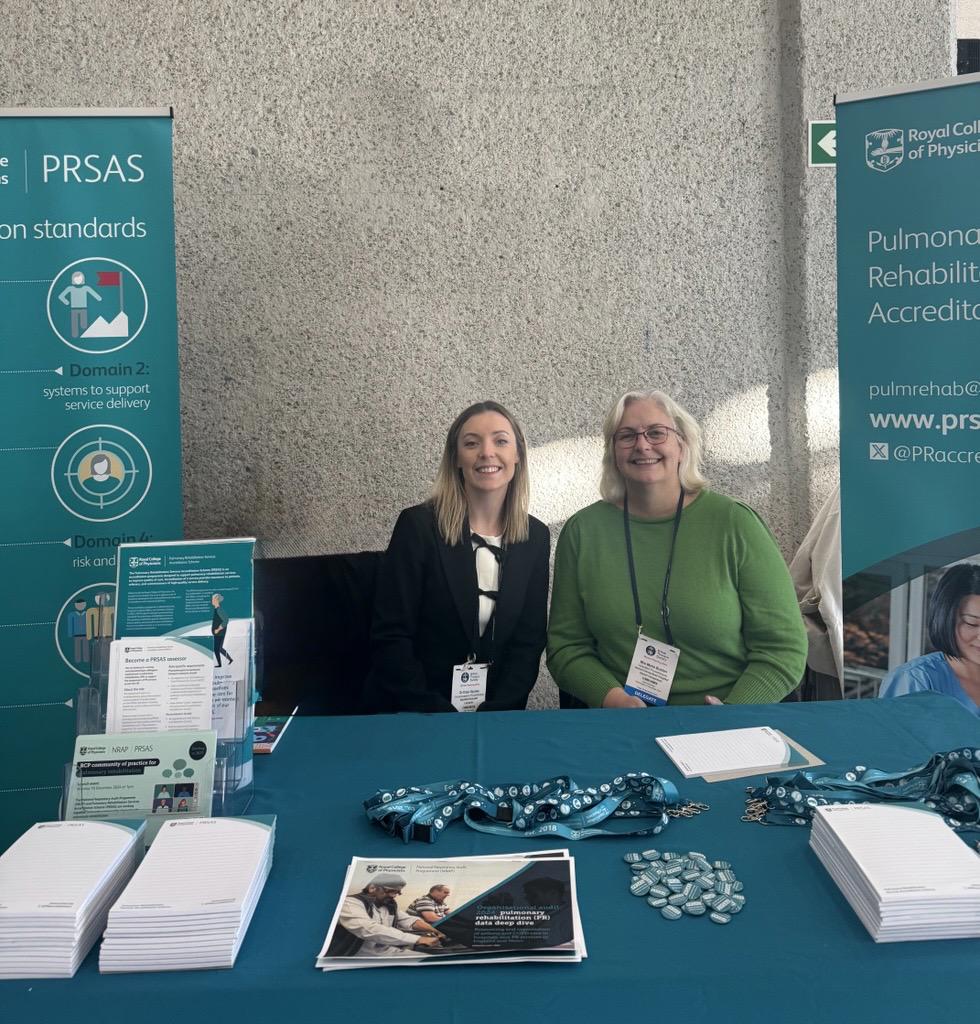
Behind every accreditation award is a wider community whose contributions are essential to the programme's success. Maria is keen to acknowledge the dedication of PRSAS assessors, who volunteer their expertise alongside their own clinical responsibilities. ‘We couldn't have got where we are without all the assessors working incredibly hard. They've been very loyal and we want to acknowledge that and applaud it.’
She also highlights the contributions of the wider PRSAS leadership and operational teams, who continue to support services throughout every stage of their accreditation journey.
Going forwards
Looking ahead, both Maria and Gemma see accreditation as an ongoing commitment rather than a one-off achievement.
For UHB, maintaining accreditation means continuing the systems, governance structures and quality improvement processes established through the programme. For PRSAS, the focus is increasingly on demonstrating the measurable impact of accreditation and promoting its value across respiratory services.
Maria says: ‘What we need to do now is get a platform where we can shout about why accreditation is worth it and what it brings to services. I'm hoping that as accreditation becomes part of the landscape, what that will do is drive up the quality of pulmonary rehabilitation across the whole country. It would be great to see consistently high outcomes across the UK and no postcode lottery anymore.’
As PRSAS celebrates 50 accredited services, the milestone marks both an achievement and an opportunity. It reflects the dedication of services such as UHB, the commitment of assessors and stakeholders and a growing national movement focused on continuous QI.
Most importantly, it demonstrates what can be achieved when services are supported to reflect, improve and strive for excellence. The first 50 accredited services have laid strong foundations. The next 50 will continue to raise standards and improve outcomes for pulmonary rehabilitation patients across the UK.
It's a lot of work, but it's absolutely worth it. The accreditation process has completely transformed our service. It's made us fit for the future, given us a much clearer structure for development and improved the way we work together as a team.
Gemma Atkins
Pulmonary rehabilitation lead, University Hospital Birmingham
As UHB's experience shows, accreditation is much more than achieving a quality mark. It provides a framework for QI, strengthens governance, supports service development and helps teams deliver the best possible care for patients.
Get involved
Whether you're considering accreditation for the first time or preparing for submission, PRSAS offers a range of support including guidance resources, webinars, accreditation events and opportunities to learn from accredited services and experienced assessors. Visit the PRSAS website or reach out to the team on pulmrehab@rcp.ac.uk to find out more.
