


























The way that doctors are trained shapes not only their own careers, but the care that patients receive. As the medical profession considers how to create a training system that is fit for the future, the ongoing NHS England medical education and training review is examining how postgraduate medical education can better support resident doctors, strengthen the workforce and ensure patients continue to receive high-quality care.
In this conversation, Professor Dame Jane Dacre, chair of phase 2 of the review, and Dr Seán Coghlan, chair of the RCP Student and Foundation Doctor Network (SFDN) discuss the challenges facing medical training and how to build a more flexible, supportive and sustainable system.
Seán: How is the review going and what can the medical community tackle collectively? What's the one problem you're most determined to fix?
Jane: The problem is that there isn't one problem; all of it needs to be fixed – but some things that are more fixable than others.
The culture within medical education and training has drifted. That culture that has crept into the profession is really about a lack of agency and a lack of value.
Actions have been taken for well-founded reasons, without taking an overall strategic view. As a result, we've ended up with a system that has too many rules, is too inflexible and nobody is happy with it.
Seán: Yes, cumulative changes have shaped that. Training feels unrecognisable compared to my senior colleagues’ descriptions. Many things have changed for the better, but there's longing for that past sense of community and camaraderie.
Jane: If you look at the evolution of medicine, medical education was a huge part of what great philosophers and early physicians did. Gradually, as medicine has become more complex to deliver, we've ended up losing sight of the core magic that constitutes what a doctor is.
The rigid structures were introduced in good faith and for a reason, but they have not produced a cohesive, strategic whole for the profession.
Cultural change takes a long time. We've got a short time frame because of the politics – the dissolution of NHS England and its merger into the Department of Health and Social Care; everything is a bit chaotic. There are some advantages; if we have a clear view, there will be fewer bureaucratic barriers.
But we've got to get on with it – to start working together as a profession, agreeing and using our collective intellectual and practical power to get things done.
Seán: What role should medical colleges play in a reformed training system?
Jane: Colleges have a huge role. They are the cultural home of specialty groups. Many necessary changes are not about statutory change or formal structures. The hearts-and-minds work is very much in the bailiwick of the colleges.
Phase one showed how everybody is blaming everybody else. If all organisations worked in harmony, we'd be more likely to achieve a positive outcome.
The colleges set curricula; several that say almost the same thing and an enormous amount of commonality. To create resident doctors who understand medicine’s holistic nature, colleges must identify what can be shared – what every doctor needs to know.
Seán: That leads into the topic of generalism, which has come up a lot recently. We hear from many resident doctors that, the general internal medicine component is perceived as having limited educational value. Where do you feel the balance should lie between generalism and specialism?
Jane: We need both. I have been a generalism advocate since I was RCP president. There are generalist skills that every doctor needs. As a medical registrar, it was the best job in the hospital. You saw an incredible range of patients and got to work with a varied mix of colleagues. It grieves me that that is no longer the case.
There are some doctors who are happy with a greater proportion of generalist skills, and others who only ever want to be specialists. When I created my training diagram, there are some pathways that go directly to the top but most lines allow flexibility.
We need flexibility for people on a specialist training track; to have the opportunity to rethink professional direction.
I would like to see a system where everybody is guaranteed employment until they reach CCT. That would help with bottlenecks; you wouldn't necessarily get the wanted job or region, but you wouldn't have to worry about unemployment.
Seán: That has been the number one concern that I've heard as SFDN chair. People are unable to focus on exams and training because of unemployment fears.
Jane: It's not right for people who have invested so much time and money to be at risk of unemployment. There must be a way of finding a job for everybody. We ought to look more at market forces: where can jobs be created? Where do people need to go? But, if you want to achieve high employment, there has to be flexibility about where doctors live and what they do.

Image: Seán and the SFDN in 2025.
Seán: It would be unreasonable for people to assume they'll get their top specialty and geographical location. When you look at population demographics, there will need to be more understanding from doctors about working where patient need exists. If that came with guaranteed career security and progression, it could be broadly supported.
Jane: I hope so.
Phase 1 of the review was a fantastic piece of work; however, it didn’t look enough at the changing demography of the profession. The profession has become more diverse; more international medical graduates and, last year, the profession became majority female. I would guess that geography is becoming increasingly important, so the balance between specialty and geography might change. That could help empower employers in areas with ageing populations and few doctors – if employers could make working in that part of the world attractive.

Another issue to fix is making sure that the training experience standard is uniform. That comes from giving employers agency; encouraging them to be the best employers and educators of resident doctors. Employers often feel that training is managed elsewhere, so they don't worry about it. Well, they need to start worrying.
Professor Dame Jane Dacre
Chair of phase 2 of the national medical education and training review
Seán: Do you think it's a case of soft diplomacy or needing a mechanism to enforce uniform training standards?
Jane: I am a great believer in soft power and encouraging medical professionals doing what they believe is right. People don’t get up in the morning intending to do a bad job in the health service. Therefore, we need to focus on encouraging, supporting and engaging people – perhaps encouraging them to compete with their neighbours.
Seán: One of the biggest concerns is that training has been squeezed by service pressures. How do we rebalance that in an overburdened system?
Jane: It’s a difficult balance.
The division between service and training is artificial. Properly supervised service is educational. You don't reach mastery in anything without a great deal of experience.
One way to reduce that gap is to empower educators and increase educational time. That's within the gift of trusts. A challenge for trusts is that they're constantly dealing with today's crisis. We need to help them think beyond that; to consider tomorrow's workforce.
If service activities became supervised opportunities – running a clinic, delivering a list, undertaking other clinical work – they would develop expertise.
Seán: Among my cohort there is a sentiment that a move away from rotational training might incentivise trusts to invest more educator time, expertise and training. Is that worth exploring?
Jane: There is evidence from US training that environment, people and bonds with colleagues are more important than seeing every specialty. Longer placements based around one team could be beneficial.
Medical education is a lifelong pursuit for doctors. You're not fully formed when you become a consultant; if you have training gaps, you can fill them later.
There is a rotations group, separate from the review, exploring increased flexibility. Some NHS regions are very large. You might have to move a long way for training rotation. That's simply unhelpful – especially with changing workforce demographics and caring responsibilities. Rotational training needs to be looked at with a better understanding of the lives of resident doctors.
Seán: With the core structures of training, particularly foundation, do you have any thoughts?
Jane: There are clearly two schools of thought. One argues that the foundation programme is excellent; it equips people with transferable skills, valuable beyond medicine.
However, there seems to be an equal and opposite view that medical schools should be preparing graduates for clinical practice – that foundation year 2 shouldn't exist in its current form.
There will need to be difficult discussions and to arrive at an evidence-based consensus.
Seán: Many foundation doctors are interested in clinical academia, but early-career clinical academic numbers are disheartening. They feel that foundation programme and rotational training shortcomings hinder clinical academia. How do we reinvigorate that?
Jane: One of the largest, most active working groups is the Clinical Academic Working Group who will come up with proposals that we can then evaluate.
Clinical academia isn't only an NHS issue, but a challenge for medical schools, universities and the wider academic sector. We need to work together. We need to increase clinical academic medicine opportunities but also support people if they haven’t developed as many clinical competencies as needed for other paths.
The prior learning recognition has been agreed by the steering group; making it easier if somebody reaches a career progression barrier and moves roles. If you can accumulate recognised competencies , it makes those challenges a little easier – and makes the prospect of not making it as a clinical academic less frightening.
Seán: It is certainly a big task. I'm reassured to hear that you're not afraid to tackle big issues and engage in blue-sky thinking.
Jane: Well, I'm not afraid to start.
This is a major culture change. We won’t do it in a year. I want to make sure that, as we work through this review, we give it the best possible chance of success; understanding why good ideas falter and not going down those same roads.
When I was RCP president, a senior politician said to me: ‘The problem with doctors is that you're always jeering from the sidelines and you don't get on the pitch.’
I thought that was incredibly rude. But I've thought about it ever since, and it's time that we got onto that pitch.
If we don't sort ourselves out, we'll be sorted out in a way that doesn't suit us. We need to act together across all branches of the profession, and be clear about what is right for education and training. It's really important that we bring people with us; that we work together to develop solutions and stop looking at our own bit of the system in isolation.
Professor Dame Jane Dacre
Chair of phase 2 of the national medical education and training review
Read the RCP's response to the NHS England medical training review phase 1 diagnostic report. Read more about the RCP's next generation campaign which supports early-career doctors and training.
Professor Dame Jane Dacre
SPS Committee chair
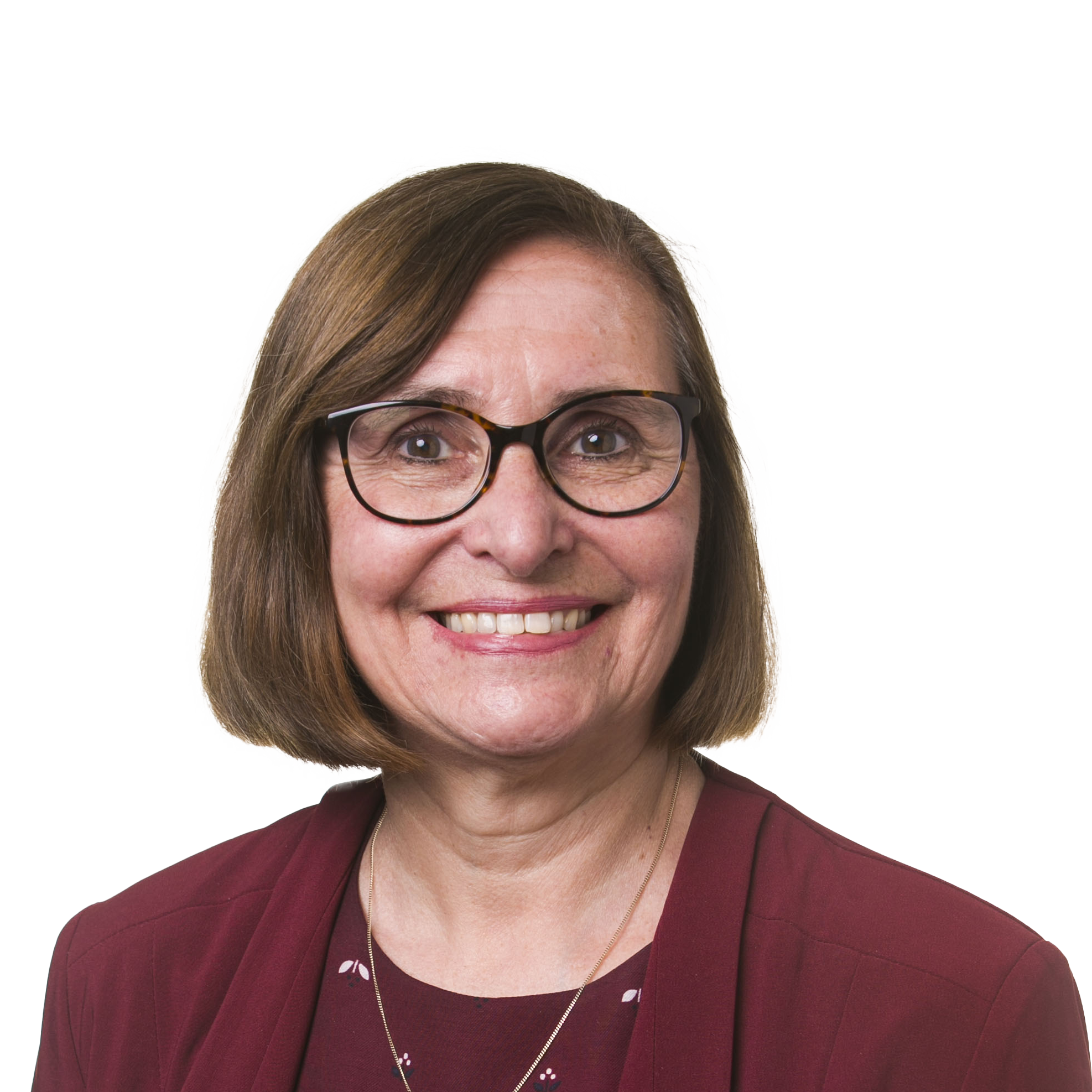
Dr Seán Coghlan
SFDN chair and representative for Northern Ireland